Tailoring#

Cloth tells a stranger who you are before you speak. Make sure it tells the truth, or a better lie.
The trade of fiber, yarn and cloth: spinning, dyeing, weaving, knitting and sewing them into clothes, costumes, packs and armor. A good tailor dresses a lord. A great one makes a commoner look like one.
Ranks and quests#
The guild’s hall sets each rank’s quest. Six ranks has what every rank makes, and making something how the craft roll works.
- Level0Rank 1: Inquirer
Trash to Shoddy · ×1 worth · 1d6 craft roll
Spin a full spindle of yarn even enough that the hall can knit with it.
- Level20Rank 2: Hobbyist
Crude to Inferior · ×1.25 worth · 2d6 craft roll
Knit a cloak for someone heading somewhere cold.
- Level40Rank 3: Apprentice
Shoddy to Acceptable · ×1.5 worth · 2+3d6 craft roll
Weave a bolt of cloth in a weave the hall chooses, without a flaw in a hand's span of it.
- Level60Rank 4: Journeyman
Poor to Fine · ×1.75 worth · 4+4d6 craft roll
Dress a performer for a night that matters to them, and be in the crowd to watch.
- Level80Rank 5: Master
Inferior to Flawless · ×2 worth · 5+5d6 craft roll
Make cloth armor good enough that someone chooses it over leather for a fight.
- Level100Rank 6: Artisan
Adequate to Masterwork · ×3 worth · 6+6d6 craft roll
Weave a piece every tribe of Dumasque would accept as a gift. The hall will tell you if you've offended one.
The work#
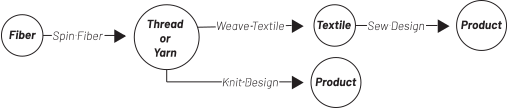
The simplest tailoring is gathering fiber, spinning it into yarn and knitting the yarn into a piece. Finer work weaves cloth first, then cuts and sews it to a pattern. Cloth gear salvages into tatters and patches, or yarn if it was knitted.
Spinning, weaving and sewing#
Gather fiber, then spin fiber into yarn or thread and dye fiber for color. Knit design turns yarn straight into a piece, and press fibers makes felt. For woven work, weave textile on a loom: the lengthwise threads are the warp, the threads woven across them are the weft, and the gap opened by lifting alternate warp threads is the shed the shuttle passes through. Sew design cuts and sews the finished cloth.
Skills and tools#
- ReconditionInquirer
- Recondition is used to fix minor problems in cloth and leather armor, turning fair or excellent condition items into mint condition.Tools: needle
- RepairHobbyist
- Repair is used to fix major problems in cloth and leather armor, turning damaged or mediocre condition items into fair condition items so they can then be reconditioned to mint.Tools: needle, patch
- RebuildApprentice
- Rebuild is used to completely overhaul broken or ruined condition cloth and leather armor into damaged condition items so they can be repaired and reconditioned back into pristine shape.Tools: needle, sewing table
- Weave Textile
- Create textile using loom, shuttle, & yarn
- Knit Design
- Need knitting needle and yarn.
- Sew Design
- Requires needle, thread, textile, & design
- Gather Fiber
- Gathers raw fiber from plan or animal.
- Spin Fiber
- Need spindle and loom, yarn or thread.
- Dye Fiber
- Dyes raw fiber before spinning
- Press Fibers
- Combine fibers together to creased pressed fibers
Tools and supplies (13)
| Tool | What it is for |
|---|---|
| Yarn | Yarn is similar to thread except it uses more material and is spun to be larger, generally used for winter clothing. |
| Spindle | Object by which yarn and thread is spun onto. |
| Spinning Wheel | Used to spin raw materials into thread. |
| Rolag | Used to spin raw materials into yarn. |
| Needle | Used to make designs. |
| Thread | Similar to yarn except it uses less material and is spun to be smaller and finer. Thread is predominately used in stiching fabric together, or other needlework. |
| Shuttle | Object used to compact store weft while weaving. |
| Treadle Loom | The most simple loom available. Though expensive, these devices are the most simple to use. |
| Dobby Loom | Dobby looms are quite a bit more expensive than treadle looms, but requires half the time of weaving with their moving parts to assist the tailor. |
| Jacquard Loom | Jacquard looms are the most expensive of the looms but don't require shuttles. They are similar in speed with the dobby looms. |
| Knitting Needle | Required to knit fabric. |
| Patch | A patch is a roll of stout cloth scraps that tailors and leatherworkers cut from and sew over tears and worn spots, with a needle, to repair cloth and leather armor. |
| Sewing Table | A sewing table is a broad, smooth table with a lip to keep the work from sliding. Tailors and leatherworkers lay a ruined garment flat across it to take it apart and rebuild it. |
What it makes#
Weaves and looms#
| Weave | What it is |
|---|---|
| Plain Weave | Warp and weft are aligned so they perform a crisscross pattern. Each weft crosses the warp threads by going over one and then under the next, and so on. Also known as the tabby or taffeta weave. |
| Basket Weave | Variation of plain weave in which two or more threads are bundled and then woven as one in the warp, weft or both. |
| Double Weave | Where two or more sets of warps and more sets of weft interconnect to form two layered cloths. Usually has complex patterns. |
| Pile Weave | Woven over metal rods or wires that are inserted in the shed during weaving. |
| Satin Weave | Consists of four or more weft yarns floating over a warp yarn or vice versa. This creates a lustrous appearance. |
| Twill | Made by passing weft threads over one warp thread and then under two or more warp threads, over one, then again under two. Usually made by offsets, creating steps. |
| Pressed Fibers | There is no weave, it is simply fibers pressed together in a matted state. |
| Loom | What it is |
|---|---|
| Treadle Loom | The most simple loom available. Though expensive, these devices are the most simple to use. |
| Dobby Loom | Dobby looms are quite a bit more expensive than treadle looms, but requires half the time of weaving with their moving parts to assist the tailor. |
| Jacquard Loom | Jacquard looms are the most expensive of the looms but don't require shuttles. They are similar in speed with the dobby looms. |
Fibers and textiles#
Fibers (14)
| Fiber | DC | Description |
|---|---|---|
| Cotton | 5 | White, fluffy fiber pulled from the seed bolls of the cotton plant. It spins and weaves into cheap, soft cloth. |
| Linen | 5 | Cloth woven from flax fiber, crisp, cool and slow to wear out. It is the common stuff of shirts, sheets and bandages. |
| Wool | 5 | Crimped sheep’s fleece, washed and carded into soft fiber. It is cheap, warm and still warm when wet. |
| Bamboo | 8 | Green wood. |
| Alpaca Hair | 10 | Soft, warm fleece sheared from alpacas, lighter than wool and without its itch. It is rare and very expensive. |
| Hemp | 10 | Coarse, tough plant fiber stripped from hemp stalks. It goes into rope, sacking and sailcloth. |
| Mohair | 10 | Long, glossy hair combed from long-haired goats. It holds dye brightly and costs a fortune. |
| Ramie | 10 | A strong, glossy plant fiber stripped from a nettle-like stalk. It weaves into a stiff cloth much like linen. |
| Silk | 10 | Fine, gleaming thread unwound from moth cocoons, one unbroken strand to each. It is light and strong, and it costs a fortune. |
| Nettle | 15 | Fiber stripped from stinging nettle stalks, gathered with gloves and patience. It spins into a strong, fine thread that is worth the stings. |
| Spidersilk | 15 | Silver thread harvested from the webs of giant spiders, stronger than steel wire of the same weight. Mages pay a fortune for it because it strengthens their spells. |
| Raffia | 16 | Long, pale ribbons of fiber peeled from palm leaves. Weavers use it for baskets, hats and tying bundles. |
| Jute | 17 | A long, golden-brown plant fiber, coarse but strong, usually made into sacks and twine. A mage wearing it casts a little stronger. |
| Barkcloth | 18 | Inner tree bark soaked and beaten thin into a soft, papery cloth. Woven into a mage’s gear, it strengthens a spell a little. |
Woven textiles (21)
| Textile | DC | Weave | Fibers | Description |
|---|---|---|---|---|
| Linen | 5 | Plain | Cloth woven from flax fiber, crisp, cool and slow to wear out. It is the common stuff of shirts, sheets and bandages. | |
| Zibeline | 5 | Twill | A thick wool cloth with a long, lustrous nap laid in one direction like sable fur. It is warm, and gear made of it turns some earth magic. | |
| Flannel | 7 | Twill | Soft, loosely woven wool brushed to a fuzzy nap. It is cheap and warm, the stuff of nightshirts and winter linings. | |
| Tulle | 7 | Satin | A fine, light netting, stiff enough to hold a shape. It makes veils, ruffles and trim. | |
| Brocade | 8 | Satin | Heavy cloth with raised patterns woven in, sometimes in gold or silver thread. It is used for formal coats, vestments and hangings. | |
| Canvas | 8 | Basket | Heavy, tightly woven cloth that sheds wind and most rain. It makes tents, sails, packs and tarps. | |
| Moleskin | 8 | Pile | Heavy cotton with a short, brushed nap as soft as a mole’s fur. Workers wear it for its toughness, and it turns a little earth magic. | |
| Chino | 9 | Twill | A sturdy cotton twill, smooth on the face and hard to tear. It makes good work and soldiering trousers. | |
| Crape | 9 | Double | A thin cloth with a crinkled, crimped surface, usually dyed black. Mourners pay dearly for a veil of it. | |
| Hodden | 9 | Basket | Coarse, undyed grey wool, woven at home from the fleece as it came off the sheep. It is a peasant’s cloth, but a well-made bolt sells high. | |
| Velvet | 9 | Pile | A dense cloth with a short, even pile that looks darker or lighter depending on how it is brushed. It is soft, rich and very costly. | |
| Buckram | 10 | Plain | Coarse cloth stiffened with glue until it holds whatever shape it is pressed into. Tailors use it for hat brims, collars and book covers. | |
| Burlap | 10 | Basket | Rough, loose-woven cloth of jute or hemp that scratches the skin. It is good for sacks, sandbags and not much else. | |
| Harris Tweed | 10 | Double | A rough wool flecked with heather colors, thick enough to turn wind and drizzle. Every bolt comes off a home loom, and the price shows it. | |
| Felt | 11 | Pressed | Wool matted and pressed into a dense sheet rather than woven. It makes hats, boot liners and the padding worn under armor. | |
| Serge | 11 | Twill | A hard-wearing twilled wool with a diagonal rib. Mages favor it because it makes their spells hit harder. | |
| Bombazine | 12 | Satin | A twilled cloth of silk and wool, usually dyed black. It is the common cloth of mourning dress. | |
| Camlet | 12 | Plain | A fine, close-woven cloth of goat hair and silk that sheds rain. It makes good cloaks and riding coats. | |
| Damask | 12 | Satin | A reversible cloth with a pattern woven into it that shows matte on one side and glossy on the other. It is used for fine table linen and wall hangings. | |
| Polar Fleece | 13 | Pressed | Thick, fluffy pile cloth that holds its warmth even when soaked. Gear lined with it turns some water harm. | |
| Batiste | 16 | Plain | A fine, nearly sheer cloth of cotton or linen, hard to weave well. It makes handkerchiefs, collars and underlinens. |
What a tailor makes#
Armor (12)
| Piece | DC | Material |
|---|---|---|
| Cap | 5 | 4 cloth |
| Armband | 8 | 6 cloth and leather |
| Cloak | 8 | 20 cloth |
| Hood | 8 | 6 cloth |
| Trousers | 8 | 38 cloth |
| Gloves | 10 | 8 leather and cloth |
| Robe | 10 | 40 cloth |
| Sandals | 10 | 15 cloth |
| Mantle | 11 | 15 cloth and leather |
| Sash | 11 | 17 cloth |
| Tunic | 13 | 35 leather and cloth |
| Brigandine Armor | 20 | 71 metal and cloth |
Tools (3)
| Piece | DC | Material |
|---|---|---|
| Patch | 10 | 1 cloth |
| Polishing Cloth | 10 | 1 cloth |
| Sanding Cloth | 10 | 1 cloth |
Containers and packs (9)
| Piece | DC | Material |
|---|---|---|
| Reed Basket | 4 | 6 cloth |
| Ration Pack | 5 | 6 cloth |
| Sack | 10 | 30 cloth |
| Bag | 15 | 15 cloth |
| Knapsack | 15 | 35 cloth |
| Pouch | 15 | 14 cloth |
| Saddlebag | 15 | 45 cloth and leather |
| Satchel | 18 | 35 cloth and leather |
| Backpack | 20 | 40 cloth and leather |
Everything else (11)
| Piece | DC | Material |
|---|---|---|
| Torch | 2 | 1 wood and 1 cloth |
| Vine Rope | 4 | 2 cloth |
| Artisan’s Outfit | 20 | 80 cloth |
| Courtier’s Outfit | 20 | 80 cloth |
| Explorer’s Outfit | 20 | 80 cloth |
| Jester’s Outfit | 20 | 80 cloth |
| Peasant’s Outfit | 20 | 80 cloth |
| Royal Outfit | 20 | 80 cloth |
| Scholar’s Outfit | 20 | 80 cloth |
| Wanderer’s Outfit | 20 | 80 cloth |
| Winter Outfit | 20 | 80 cloth |
The guildmaster#
Sahrim weaves for all ten tribes of Dumasque, and under Rokson that makes her the one person every tribe has sworn not to harm. She uses the freedom to go anywhere and hear everything, and the tribal counselors know exactly how much she hears. She works the small loom at the end of the weavers’ row in Vhall Oasis, where every tribe’s buyers pass and stop to talk.
Find Sahrim of the Quice at the weavers’ row in Vhall Oasis’s central market, in Dumasque. It’s the guild’s only hall: you join there, and you come back to it for every rank’s quest, inquirer to artisan.
Trades it works with#
What tailoring gives the other trades.
 Leatherworking
Thread, and the cloth half of armor that's part hide.
 Carpentry
Cloth and stuffing for upholstered chairs, sofas and beds.
What it takes from them.
A good pair
Leatherworking: Between them they make every piece of armor that isn’t metal, and the packs to carry the rest.
Who takes it up#
The classes whose work tailoring fits best. Any class can join any guild.
 Minstrel
A minstrel is half performance and half costume, and a tailor never pays someone else for the second half.
 Priest
Vestments, banners and altar cloth: a temple goes through cloth faster than a tavern goes through ale.
 Pickpocket
A tailor knows where every pocket on a coat is, and how to sew one nobody else will find.
The guild finder ranks every guild for a class.
How it shows#
None of this changes a roll. It’s how the people around you can tell what you do for a living.
- Your own clothes fit perfectly, and you notice when anyone else’s don’t.
- There’s always a needle stuck in your collar and a length of thread wound around one finger.
What others say#
In Dumasque you can tell a man's tribe by his sash from a hundred paces, and his enemies by how fast he's walking.
Sahrim once made me a coat that convinced the Polvi I was one of theirs. It lasted until I opened my mouth.
The wrong sash
A body turned up at the edge of Dumasque wearing the sash of the Hopli tribe, and the Hopli swear he isn’t one of theirs. Under Rokson, somebody has to answer for him. Sahrim wove that sash and knows who she sold it to, and she’ll only tell someone from outside the tribes.